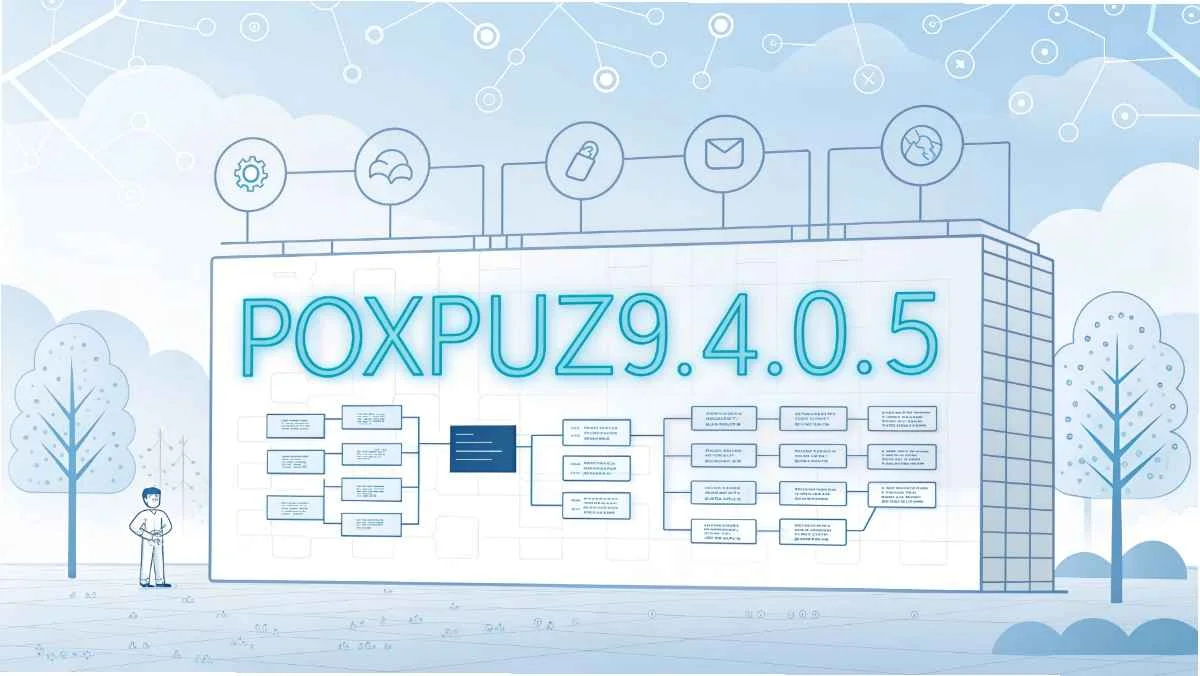
Introduction to Poxpuz9.4.0.5
In the rapidly evolving digital landscape, new platforms and systems emerge with increasing complexity and capability. One such term gaining attention in niche technology circles is poxpuz9.4.0.5. While it may initially appear to be a random string of characters, poxpuz9.4.0.5 represents a structured framework designed to optimize digital performance, streamline automation, and enhance system-level intelligence.
The naming convention itself suggests a version-based architecture, where “9.4.0.5” likely indicates a refined iteration within a broader development cycle. Advanced systems often adopt numeric segmentation to signify major updates, minor revisions, stability improvements, and security patches. From a technical standpoint, such a structure hints at maturity, testing phases, and systematic deployment strategies.
In this article, we will explore poxpuz9.4.0.5 from multiple angles: its conceptual foundation, architecture, core components, security protocols, use cases, advantages, limitations, and future roadmap. This comprehensive guide is written in a clear, conversational tone while maintaining the authority and depth expected from an industry expert.
The Concept and Evolution of Poxpuz9.4.0.5
Every advanced system begins with a core idea. Poxpuz9.4.0.5 was conceptualized as a modular digital optimization engine. Its purpose was not merely to perform tasks but to intelligently coordinate them across platforms. Early iterations focused primarily on automation and structured data processing, but subsequent updates introduced adaptive logic and real-time performance balancing.
The “9” in the version identifier likely represents a mature release stage, suggesting that the framework has undergone multiple cycles of testing and refinement. Major versions often introduce structural changes such as updated APIs, expanded compatibility layers, or performance reconfiguration. By the time a system reaches version 9, it generally signifies reliability and extensive user feedback integration.
The later digits—“4.0.5”—may represent incremental improvements. Minor releases typically enhance features, resolve inefficiencies, and strengthen integration capabilities. Patch updates refine system stability and security. This structured evolution reflects a disciplined development approach, ensuring that poxpuz9.4.0.5 remains adaptable while preserving backward compatibility.
Core Architecture and System Framework
At its core, poxpuz9.4.0.5 operates on a layered architecture model. This means its internal structure is divided into distinct tiers, each responsible for specific operations. Such architecture promotes scalability and simplifies maintenance.
The foundation layer manages resource allocation. It monitors system memory, processing load, and data throughput. Instead of passively consuming resources, it dynamically adjusts performance parameters based on workload. This is particularly useful in high-demand environments where performance spikes are common.
Above the foundation lies the logic layer. This is where intelligent decision-making occurs. The logic engine processes inputs, evaluates predefined rules, and generates optimized outputs. Because the system is modular, developers can modify logic modules independently without affecting the entire structure. This flexibility makes poxpuz9.4.0.5 suitable for diverse deployment scenarios.
The top layer consists of the interface and integration modules. These modules enable communication with external applications, databases, and cloud services. Compatibility with APIs and structured data protocols ensures seamless connectivity across platforms.
Key Features and Functional Capabilities
One of the defining features of poxpuz9.4.0.5 is adaptive automation. Unlike traditional automation tools that follow rigid scripts, this system can adjust workflows based on real-time feedback. For instance, if a process encounters latency, the engine redistributes computational tasks to maintain efficiency.
Another powerful capability is data normalization. In many digital ecosystems, inconsistent data formats cause operational friction. Poxpuz9.4.0.5 standardizes input streams before processing them. This ensures accuracy and reduces the risk of integration errors.
Security integration is also embedded directly into the framework. Instead of treating security as an external layer, it is woven into every operational tier. Encryption protocols, access control validation, and anomaly detection mechanisms operate simultaneously, providing comprehensive protection.
 Applications Across Industries
Poxpuz9.4.0.5 demonstrates versatility across multiple sectors. In enterprise environments, it can function as a workflow orchestration engine. Organizations can automate internal processes, manage cross-department data exchange, and maintain operational transparency.
In technology startups, the framework can serve as a backend intelligence layer. Developers can integrate it with web applications or cloud infrastructures to enhance performance without building complex systems from scratch.
Even in research and analytics, poxpuz9.4.0.5 can process structured datasets efficiently. Its normalization engine ensures data consistency, which is critical for predictive modeling and machine learning tasks.
Security and Stability Mechanisms
Modern digital systems cannot afford vulnerabilities. Poxpuz9.4.0.5 incorporates layered security principles. Authentication protocols verify user access before granting operational privileges. Role-based access control prevents unauthorized system manipulation.
Data encryption operates both at rest and in transit. This ensures that sensitive information remains protected regardless of its storage state. Additionally, automated anomaly detection scans for irregular patterns, flagging suspicious behavior before it escalates.
Stability is reinforced through version-controlled patch updates. The structured 9.4.0.5 designation implies incremental improvements that address potential bugs while preserving core functionality. This disciplined release cycle enhances trust and reliability.
Performance Optimization and Scalability
Performance optimization is not an afterthought in poxpuz9.4.0.5—it is central to its design. The system continuously monitors workload distribution and reallocates resources accordingly. This reduces bottlenecks and maintains consistent throughput.
Scalability is equally impressive. Whether deployed in a small environment or scaled across distributed cloud networks, the architecture adapts without requiring structural overhaul. Horizontal scaling allows additional nodes to join the network seamlessly.
Moreover, performance logs and analytics provide administrators with actionable insights. By analyzing these metrics, teams can refine configurations and further enhance efficiency.
Advantages and Potential Limitations
The strengths of poxpuz9.4.0.5 lie in its modular design, adaptive automation, and integrated security. Its structured versioning suggests maturity and careful development practices. Organizations benefit from reduced operational friction and improved digital coordination.
However, as with any advanced system, complexity may pose a learning curve. Teams unfamiliar with layered architecture might require training before full deployment. Additionally, customization demands technical expertise to maximize its potential.
Despite these considerations, the long-term benefits typically outweigh initial setup challenges. Once configured correctly, the framework operates with remarkable consistency and reliability.
Future Outlook and Development Path
Looking ahead, poxpuz9.4.0.5 is poised for further evolution. Future updates may incorporate advanced AI-driven optimization, predictive maintenance features, and expanded cross-platform compatibility.
As digital ecosystems grow more interconnected, frameworks like this will become increasingly valuable. Systems must not only process data but interpret and optimize it intelligently. The structured versioning approach indicates readiness for continued refinement.
Ultimately, poxpuz9.4.0.5 represents more than a technical label—it symbolizes a disciplined, modular, and forward-thinking approach to digital system management.
Conclusion
Poxpuz9.4.0.5 stands as a sophisticated, modular framework designed to enhance automation, streamline data processing, and ensure system stability. Its layered architecture, adaptive capabilities, and embedded security measures reflect thoughtful engineering.
From enterprise applications to research environments, its versatility makes it a compelling solution. While implementation may require expertise, the long-term gains in efficiency, scalability, and security justify the investment.
As technology continues to advance, frameworks like poxpuz9.4.0.5 will play a pivotal role in shaping intelligent digital ecosystems. Understanding its architecture and potential today prepares organizations for tomorrow’s innovations.